If you are looking at robots for an older parent, a grandparent or the residents of a care home, it helps to start with what is actually on sale. In 2026 there is no robot you can buy that will wash, dress or lift a person at home. What you can buy are companion devices that talk, remind and entertain, and soft robotic animals that respond to touch.
This hub explains each type in plain English, summarises what independent research does and does not show, and flags the questions families should ask about cost, privacy and dignity. We have not tested these products ourselves. Our summaries draw on manufacturer information, peer-reviewed studies, public programme reports and patterns in owner reviews.
Start with companion robots if the main worry is loneliness, or robot pets if you are supporting someone living with dementia. Our ElliQ review looks in detail at the best-known companion robot for older adults.
Types of robots for elderly care at a glance| Type | Examples | Typical cost | What it can do | What it cannot do |
|---|
| Companion robot | ElliQ | $249.99 setup plus $49.99 to $59.99 a month (US) | Conversation, reminders, video calls, games | Physical help, emergency response |
| Robot pet (consumer) | Joy for All, Moflin, MetaCat | $99 to $429 | Comfort, touch, a calming routine | Conversation, monitoring |
| Robot pet (clinical) | PARO | around $6,100 | Structured sessions in care settings | Unsupervised all-day use |
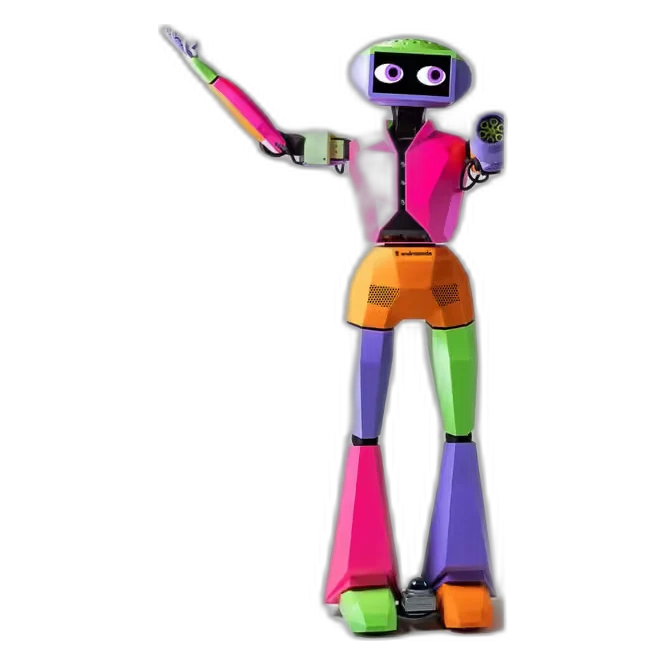
| Care-home robot | Andromeda Abi | Quote only | Group activities, conversation in many languages | Personal care tasks |
| Physical assist robot | MIT E-BAR (research) | Not for sale | Sit-to-stand support, fall catching in trials | Not yet available to buy |
Model by model
Best for older adults living alone (US only)
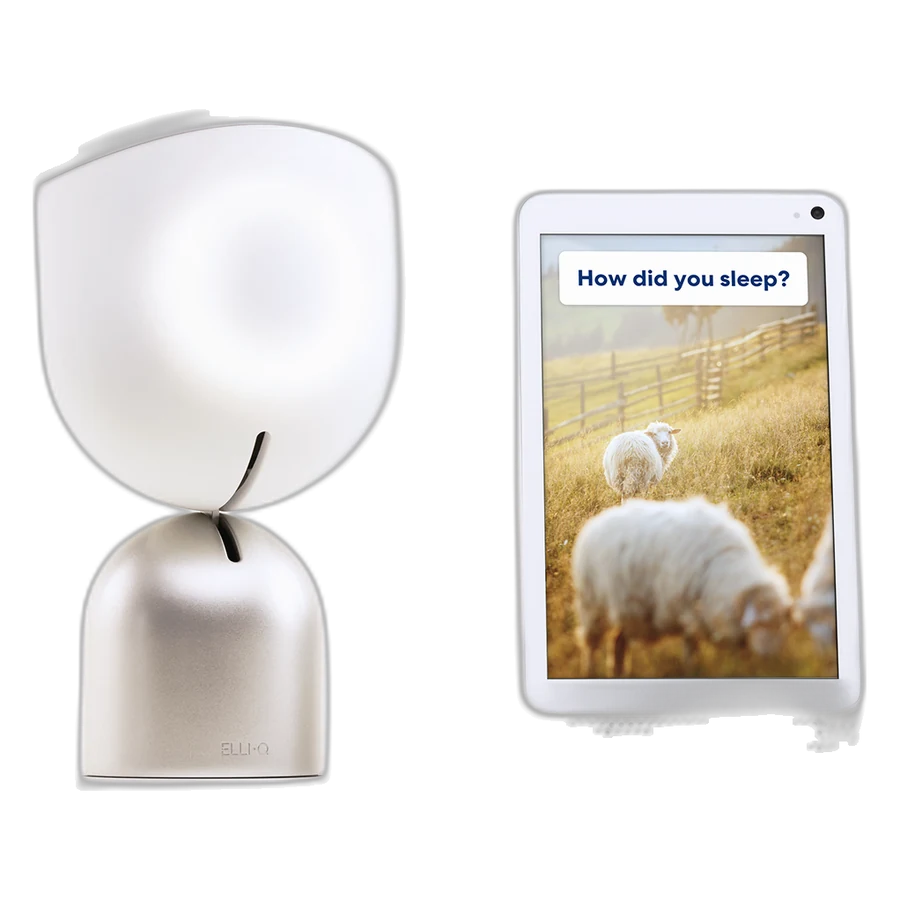
ElliQ
Best for: People who live alone, are comfortable with a screen and would welcome a device that starts conversations
- Price
- $249.99 setup fee plus $59.99 a month, or $49.99 a month on an annual plan (Oct 2026, ElliQ store)
- Type
- Tabletop social robot with tablet screen
- Moves around
- No, it sits on a table
- Needs
- Mains power and Wi-Fi
- Availability
- United States only, English only
Pros
- Starts conversations and check-ins on its own rather than waiting to be asked
- Video calls and messages with approved family members
- Reminders, gentle exercise sessions and games
Cons
- Ongoing subscription, and the device is leased rather than owned
- Not an emergency or medical alert device
- Not sold outside the US
Verdict: ElliQ is the most established companion robot designed specifically for older adults. Company and state programme reports describe strong engagement, but independent controlled trials are still lacking. See our full ElliQ review before signing up.
Best low-cost robot pet
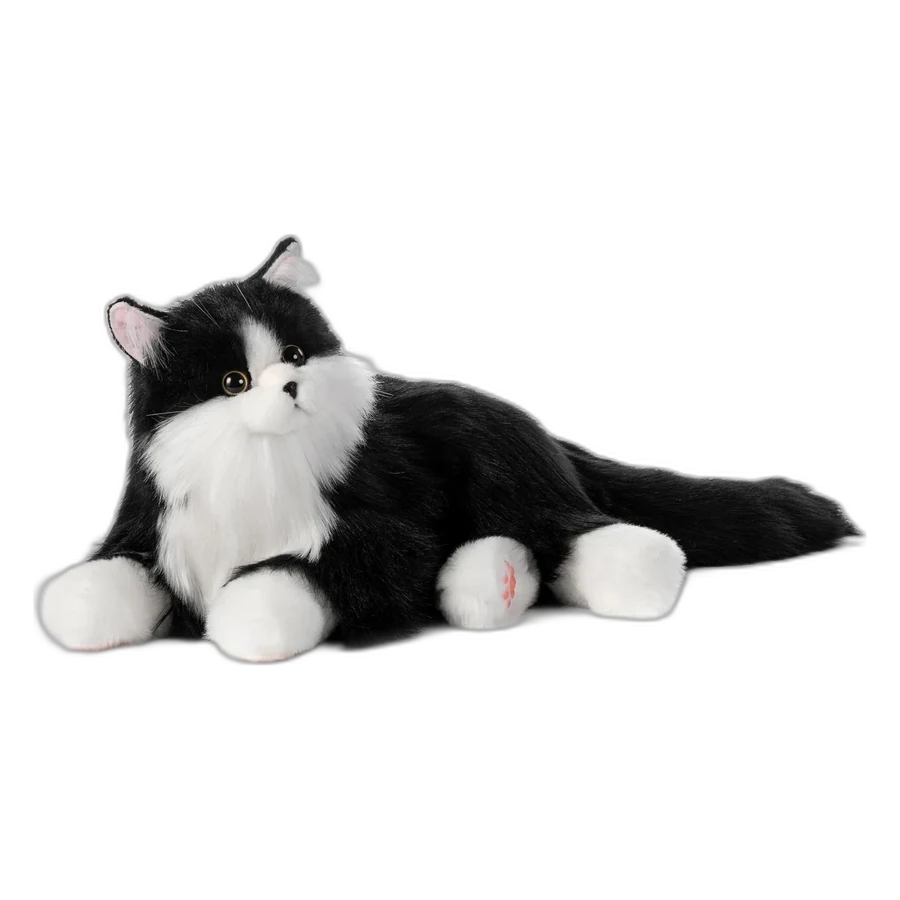
Joy for All Companion Pet Cat
Best for: People living with dementia who loved cats, and families on a modest budget
- Price
- $159.99 (Oct 2026, Joy for All store) / around £127 (Oct 2026, RobotShop UK)
- Responds to
- Petting and hugging
- Sounds
- Purrs and meows
- Power
- 4 x C batteries (included)
- Weight
- About 3.9 lb (1.8 kg)
Pros
- Simple to use with no app or Wi-Fi
- Soft, realistic fur and a gentle purr
- Widely given out by US ageing services programmes
Cons
- Disposable batteries need changing
- Some users are upset if it stops moving and seems unwell
Verdict: A straightforward, affordable comfort object. A large analysis of owner reviews found mostly positive reports, though reviews are not the same as clinical evidence.
Most researched robot pet
PARO Therapeutic Robot
Best for: Care homes, hospitals and memory care units with trained staff
- Price
- around $6,100 (Oct 2026, US retailer listing)
- Form
- Baby harp seal
- Sensors
- Touch, light, sound, temperature and posture
- Learns
- Responds to its name and to how it is treated
- Battery
- About 1.5 hours per charge (retailer figure)
Pros
- The most studied robot pet in dementia care
- Meta-analysis found a small reduction in agitation compared with usual care
Cons
- Expensive for a single household
- Short battery life per session
Verdict: PARO is the robot pet with the strongest research base and is best suited to professional care settings. For a single family the cost is hard to justify compared with simpler robotic pets.
Best rechargeable AI pet
Casio Moflin
Best for: Older adults who want a small, quiet companion that develops a personality over time
- Price
- $429 (Oct 2026, Casio US)
- Battery
- Up to 5 hours, about 3.5 hours to charge
- Weight
- About 260 g
- App
- MofLife app shows its moods
- Voice
- Recognises frequent voices but does not record speech (per Casio)
Pros
- Rechargeable, sleeps in its charging bed
- Light enough to hold for long periods
Cons
- Pricier than battery-powered robot pets
- Does not look like a real cat or dog, which some people prefer and others do not
Verdict: Moflin is a good fit for someone who wants something to stroke and look after without pretending to be a real animal. It has not been studied in care settings in the way PARO has.
What robots for elderly care can and cannot do in 2026
Most robots for elderly care fall into three groups.
- Companion robots talk, remind and connect people with family. ElliQ is the best-known example.
- Robot pets are soft animals that purr, move and respond to touch. See our robot pet guide.
- Care-home robots such as Andromeda's Abi lead group activities and chat with residents. They are sold to providers, not families.
Robots that physically help people stand, walk or move are still mostly in research. MIT's E-BAR, for example, is a prototype that supports a person's weight and uses airbags to catch falls, but MIT describes it as remote-controlled and still in development. Be wary of any listing that promises a home robot that can provide personal care today.
What the research says
The evidence is encouraging in places but thinner than marketing suggests.
- A 2019 systematic review of robot pets in care homes (Abbott and colleagues, 19 studies) found residents and staff described benefits for loneliness, mood and quality of life. When the trial data were pooled, only agitation showed a statistically significant improvement, and only for PARO. The authors said it is not yet known whether benefits last.
- A 2024 report on ElliQ (Broadbent and colleagues, including company staff) found that 80% of 173 surveyed users agreed they felt less lonely with the robot. The authors stress this was not a randomised trial and that controlled trials are still needed.
- New York State's ageing office reported a "95% reduction in loneliness" from its ElliQ programme. The published release does not explain how this was measured, so treat it as a programme report rather than a clinical finding.
In short, robots can be a source of comfort and routine for some people. They are not a treatment for dementia or depression, and nobody should expect them to be.
Privacy, dignity and consent
Any device with a camera or microphone in someone's home deserves careful thought.
- Ask what is recorded. ElliQ's FAQ says its cameras act as motion sensors and only fully switch on for features the user chooses, such as video calls, and that it listens only for its wake word when idle.
- Ask who sees updates. Family alerts should be something the older person agrees to, not something set up around them.
- Respect the person's choice. Some people find a robot pet comforting; others find it patronising. Offer it, do not insist.
- Be honest. Care organisations generally advise against telling someone with dementia that a robot pet is a real animal.
Robots complement human care, they do not replace it
Every credible source we reviewed makes the same point. Intuition Robotics says it does not believe ElliQ can replace human companionship. Staff at the Australian care provider using Abi describe it as an extra layer of companionship alongside carers. A robot cannot notice a subtle change in someone's health the way a familiar visitor can, and it cannot call an ambulance on its own. Use a robot to fill quiet hours, not to reduce visits.
How to choose a care robot
- Start with the person. Do they enjoy chatting, or would they rather stroke a cat? Are they comfortable with screens?
- Check where it is sold. ElliQ is US only. Robot pets are widely available in the US and UK.
- Add up the full cost. Include subscriptions, batteries and return fees. ElliQ, for example, charges a non-return fee if the leased device is not sent back after cancelling.
- Look for free programmes. Several US state ageing offices have given out robot pets and ElliQ devices at no cost to eligible older adults.
- Keep safety separate. If falls or emergencies are the worry, a dedicated medical alert system is still the right tool.
Free, no obligation
Get quotes from suppliers
Tell us what you need. We pass your request to up to three relevant suppliers or dealers, who contact you with prices, lease options and demos. Popular for restaurants, hotels, offices, warehouses and care settings.
We only share your details with suppliers for this request. See our privacy policy.
Buying guides
Best Companion Robot for Older AdultsThe best companion robot for older adults in 2026: ElliQ, Moflin, Joy for All, PARO and more, compared on price, featureBest Robot Pet for Elderly People and Dementia CareThe best robot pet for elderly people and those living with dementia: Joy for All, PARO, Moflin, Percy and metaCat compaElliQ Review 2026Our ElliQ review: what the AI companion robot for older adults does, what it costs in 2026, what the evidence shows, pri Frequently asked questions
Are there robots that can care for elderly people at home?
Not in the sense of personal care. Robots on sale in 2026 offer companionship, reminders and comfort. Robots that help people stand or walk, such as MIT's E-BAR, are still research prototypes.
How much does a robot for elderly care cost?
Robotic pets cost roughly $99 to $429, with PARO around $6,100. ElliQ costs a $249.99 setup fee plus $49.99 to $59.99 a month in the US (Oct 2026).
Do robot pets help people with dementia?
Some studies and many carers report calmer moods. A 2019 review found a small but significant reduction in agitation with PARO, while effects on loneliness and depression were not statistically significant when trials were pooled.
Can a robot replace a carer or family visits?
No. Even the manufacturers say their robots are designed to support, not replace, human contact and professional care.
Is ElliQ available in the UK?
No. ElliQ's FAQ says it is currently sold, shipped and supported only in the United States, in English.
Are care robots safe for privacy?
It depends on the device. Check whether it has a camera, what it records, where data is stored and who receives alerts. Choose devices that let the user control what is shared.
ET
Written by our editorial team. We compare robots using manufacturer specifications, independent lab results and owner reviews, and we update guides when prices or models change. We do not accept payment for placement.
Our research method.
Related guides
Best Companion Robot for Older AdultsThe best companion robot for older adults in 2026: ElliQ, Moflin, Joy for All, PARO and more, compared on price, featureBest Robot Pet for Elderly People and Dementia CareThe best robot pet for elderly people and those living with dementia: Joy for All, PARO, Moflin, Percy and metaCat compaElliQ Review 2026Our ElliQ review: what the AI companion robot for older adults does, what it costs in 2026, what the evidence shows, priHome Robot GuideHome robots compared: vacuums, mowers, litter boxes, companion robots and humanoid helpers. What each costs, what works Humanoid Robot for HomeCan you get a humanoid robot for home in 2026? 1X NEO pre-order facts, Figure 03 and Optimus status, privacy questions a Sources
- ElliQ plans and pricing
- ElliQ FAQs
- Broadbent et al. (2024), ElliQ, an AI-Driven Social Robot to Alleviate Loneliness
- Abbott et al. (2019), How do robopets impact the health and wellbeing of residents in care homes?
- NYSOFA ElliQ programme announcement (Aug 2023)
- MIT News: Eldercare robot helps people sit and stand, and catches them if they fall
- mecwacare and Andromeda Abi deployment release (Apr 2026)
- Joy for All Companion Pet Cat
- Casio Moflin product page
- Fortune: ElliQ and older adults (Aug 2026)