A companion robot is a device designed to keep someone company. For older adults, that usually means one of two things: a talking assistant that checks in through the day, or a soft robotic animal that responds to touch. Both aim to ease loneliness. Neither can provide personal or medical care.
This guide compares six companion robots that are on sale or available to care providers in October 2026. It sits within our wider guide to robots for elderly care. If you are mainly shopping for someone living with dementia, our robot pet guide goes into more depth on that group.
Companion robots compared| Model | Price (Oct 2026) | Talks back | Power | Best for |
|---|
| ElliQ | $249.99 setup + $49.99 to $59.99/month | Yes | Mains and Wi-Fi | Living alone (US) |
| Casio Moflin | $429 | No (sounds only) | Rechargeable | Quiet comfort |
| Joy for All Pup | $179.99 | No (barks) | Not app or Wi-Fi based | Dementia, budget |
| PARO | around $6,100 | No (seal sounds) | Rechargeable | Care homes |
| metaCat | $159 | No (responds to commands) | Rechargeable | Interactive cat |
| Abi | Quote only | Yes | Rechargeable | Care home groups |
In depth: every pick
Best overall (US only)
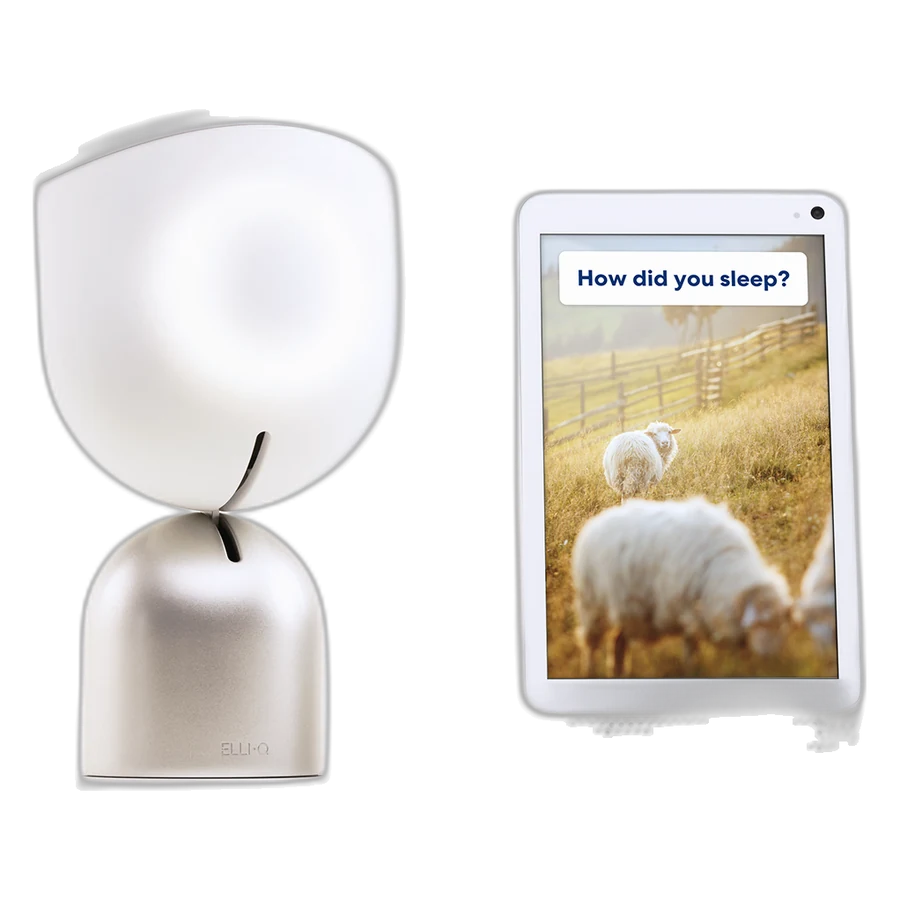
1. ElliQ
Best for: Older adults who live alone, enjoy conversation and have Wi-Fi at home
- Price
- $249.99 setup fee plus $59.99 a month, or $49.99 a month on a 12-month plan (Oct 2026, ElliQ store)
- Form
- Tabletop robot with a moving, light-up head and a separate touchscreen
- Main features
- Proactive chat, reminders, video calls, exercise and relaxation sessions, games
- Camera
- Yes, used as a motion sensor and for video calls (per ElliQ)
- Needs
- Mains power and Wi-Fi
- Availability
- US only, English only
Pros
- Starts conversations instead of waiting for a command
- Family can message and video call through a companion app
- Reports from state ageing programmes describe high daily use
Cons
- Monthly subscription; the device is leased, not bought
- Not an emergency alert device
- Some users find frequent check-ins intrusive, according to published reviews
Verdict: ElliQ is the only widely available companion robot built from the ground up for older adults, and its proactive style suits people who would not think to ask a smart speaker for anything. The cost adds up over time and the evidence is mainly company and programme data. Read our ElliQ review for the full picture.
Best AI pet companion
2. Casio Moflin
Best for: People who would like a small creature to care for, without needing to talk to a screen
- Price
- $429 (Oct 2026, Casio US)
- Battery
- Up to 5 hours of typical use; about 3.5 hours to charge
- Weight
- About 260 g
- Interaction
- Responds to touch and voice, develops a personality over time
- App
- MofLife app for moods, journal and updates
Pros
- Rechargeable and sleeps in its own charging bed
- Casio says it does not understand or record what you say
- Very light and easy to hold
Cons
- Expensive compared with battery-powered robot pets
- No conversation, reminders or video calls
Verdict: Moflin is a gentle, low-effort companion for someone who enjoys stroking a pet but cannot keep one. It is a comfort object rather than an assistant, so pair it with other support if reminders or contact with family are the priority.
Best for dementia on a budget
3. Joy for All Companion Pet Pup
Best for: People living with dementia who have fond memories of dogs
- Price
- $179.99 (Oct 2026, Joy for All store)
- Responds to
- Touch, sound and motion (per Alzheimer's Society product trial notes)
- Setup
- No app or Wi-Fi needed
Pros
- Nothing to set up or connect
- Designed specifically for older adults
- Has been distributed free by some US ageing services programmes
Cons
- Limited movement compared with pricier robots
- No conversation, reminders or video calls
Verdict: Joy for All pets are the default choice for many US care programmes because they are simple and affordable. The cat version ($159.99) is often preferred by people who like a lap pet. See our robot pet guide for a full comparison.
Best for care homes
4. PARO Therapeutic Robot
Best for: Care homes, hospitals and memory care units that can run supervised sessions
- Price
- around $6,100 (Oct 2026, US retailer listing)
- Form
- Baby harp seal
- Sensors
- Touch, light, sound, temperature, posture
- Learning
- Responds to its name and to how it is handled
- Battery
- About 1.5 hours per charge (retailer figure)
Pros
- The most studied robot pet in dementia care
- Pooled trial data show a small reduction in agitation
Cons
- High price for a single household
- Needs regular recharging during the day
Verdict: PARO is the companion robot with the deepest research base, and it is designed for professional settings. Care providers should budget for staff training and infection control as well as the robot itself.
Best for group activities in aged care
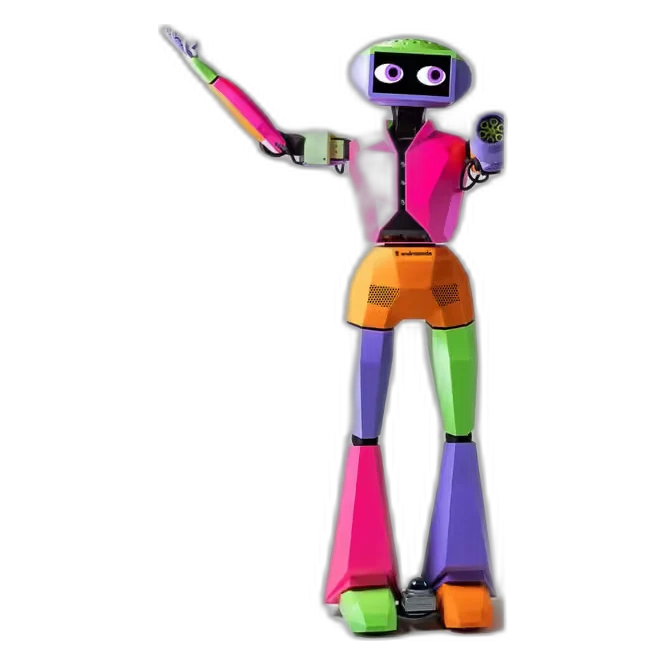
6. Abi
Best for: Residential care providers in Australia and the US
- Form
- Child-height humanoid companion
- Languages
- Up to 90, per the provider's release
- Activities
- Conversation, storytelling, singing and dancing
- Navigation
- LiDAR (a laser sensor that maps rooms)
Pros
- Built for care homes, with dementia-friendly communication
- Remembers residents and their stories
Cons
- Not sold to individuals; quote only
- Outcome figures so far come from the company's own staff surveys
Verdict: Abi shows where companion robots for care homes are heading. One Australian provider has placed 22 units across its homes and staff describe it as an extra layer of companionship alongside carers. Ask for independent evaluation data before committing.
How we chose
We have not tested these robots ourselves. Instead we looked at four kinds of evidence:
- Manufacturer information on features, power, privacy and availability, checked on official sites in October 2026.
- Independent research, including a 2019 systematic review of robot pets in care homes and a 2024 report on ElliQ users.
- Programme reports from public bodies such as New York State's Office for the Aging.
- Patterns in owner and reviewer feedback, including a published analysis of more than 1,300 online reviews of the Joy for All cat.
We only included products that are currently sold or deployed. Tombot's Jennie puppy, for example, was still taking pre-orders and waitlist sign-ups when we checked, so it is not listed.
What is a companion robot?
A companion robot is built to provide company rather than to do chores. For older adults there are two broad styles:
- Conversational companions such as ElliQ use AI (software that understands and generates speech) to chat, remind and connect people with family.
- Robotic pets such as Moflin, Joy for All and PARO respond to touch and sound. They do not hold conversations, which some people find more restful.
Humanoid robots that look and move like people are getting a lot of attention, but most are not yet sold for home use. See our humanoid robots for the home guide for the current picture.
Does a companion robot really help with loneliness?
The honest answer is: it helps some people, some of the time, and the best evidence is still limited.
- In a 2024 report on ElliQ, 80% of 173 surveyed users agreed they felt less lonely when the robot was with them, and 56% said it helped them connect with other people. The authors, some of whom work for the manufacturer, note it was not a randomised trial.
- A 2019 review of 19 studies of robot pets in care homes found staff and residents described benefits for loneliness and mood, but pooled trial results were only statistically significant for reduced agitation with PARO.
- A study of 1,327 online reviews of the Joy for All cat found three quarters described positive effects. These are reviewers' impressions, not measured outcomes.
A companion robot works best as one part of a wider plan that includes regular human contact.
Privacy and safety checklist
- Camera and microphone: ElliQ has both. Its FAQ says cameras act as motion sensors and only fully activate for chosen features like video calls. Robotic pets such as Joy for All have no camera.
- Data: Ask where data is stored and whether you can have it deleted. Intuition Robotics told Fortune users can request deletion and that it does not sell customer data.
- Emergencies: No companion robot on this list is a medical alert system. ElliQ's own FAQ says to call 911 in an emergency.
- Hygiene: In shared care settings, check cleaning instructions. Joy for All advises wipes rather than washing the fur.
Robots complement, not replace, human care
Manufacturers and care providers are clear on this point. Intuition Robotics has said it does not believe ElliQ can replace human companionship, and staff using Abi describe it as working alongside carers. A robot can make quiet hours less lonely and prompt someone to call a friend. It cannot notice that someone has stopped eating, hold their hand at the end of a hard day, or replace a visit.
Costs and free programmes
Robotic pets are a one-off purchase, roughly $99 to $429. ElliQ is a subscription: a $249.99 setup fee, then $49.99 a month on an annual plan or $59.99 month to month (Oct 2026). Its FAQ also lists a $1,500 fee if the leased device is not returned within 45 days of cancelling.
In the US, several state ageing offices have given out ElliQ devices and robot pets at no cost to eligible older adults. Ask your local Area Agency on Aging before buying. In the UK, the Alzheimer's Society notes that robotic pets are not eligible for VAT relief.
Free, no obligation
Get quotes from suppliers
Tell us what you need. We pass your request to up to three relevant suppliers or dealers, who contact you with prices, lease options and demos. Popular for restaurants, hotels, offices, warehouses and care settings.
We only share your details with suppliers for this request. See our privacy policy.
Frequently asked questions
What is the best companion robot for elderly people?
For older adults living alone in the US, ElliQ is the most complete option because it starts conversations, sends reminders and simplifies video calls. Outside the US, a robotic pet such as Casio Moflin or Joy for All is the more practical choice.
How much does a companion robot cost?
Robotic pets cost about $99 to $429. ElliQ costs a $249.99 setup fee plus $49.99 to $59.99 a month. Clinical robots like PARO cost around $6,100 (Oct 2026).
Can a companion robot call for help in an emergency?
None of the robots in this guide is an emergency alert device. If falls or medical emergencies are a concern, use a dedicated medical alert system alongside any companion robot.
Is a companion robot good for someone with dementia?
Simple robotic pets are often a better fit than talking robots for people with moderate or advanced dementia. Research shows a small reduction in agitation with PARO in care homes.
Do companion robots record conversations?
It varies. ElliQ says it listens only for its wake word when idle. Casio says Moflin does not understand or record speech. Always read the privacy policy before buying.
Can I buy ElliQ in the UK?
No. ElliQ is currently sold and supported only in the United States.
ET
Written by our editorial team. We compare robots using manufacturer specifications, independent lab results and owner reviews, and we update guides when prices or models change. We do not accept payment for placement.
Our research method.
Related guides
Robots for Elderly CareRobots for elderly care explained: companion robots, robot pets and care-home robots, what the research really shows, prBest Robot Pet for Elderly People and Dementia CareThe best robot pet for elderly people and those living with dementia: Joy for All, PARO, Moflin, Percy and metaCat compaElliQ Review 2026Our ElliQ review: what the AI companion robot for older adults does, what it costs in 2026, what the evidence shows, priHome Robot GuideHome robots compared: vacuums, mowers, litter boxes, companion robots and humanoid helpers. What each costs, what works Best Robot DogThe best robot dog for your budget: Unitree Go2, Sony aibo, Loona, Petoi Bittle and companion pups. Real robots vs toys, Sources
- ElliQ plans and pricing
- ElliQ FAQs
- Broadbent et al. (2024), ElliQ, an AI-Driven Social Robot to Alleviate Loneliness
- Abbott et al. (2019), robopets in care homes systematic review
- Koh et al. (2022), JMIR Aging: user experiences of a low-cost pet robot
- Casio Moflin product page
- Joy for All products
- Elephant Robotics metaCat
- mecwacare and Andromeda Abi deployment release
- The Next Web: Tombot raises $7m ahead of Jennie launch
- Fortune: ElliQ and older adults