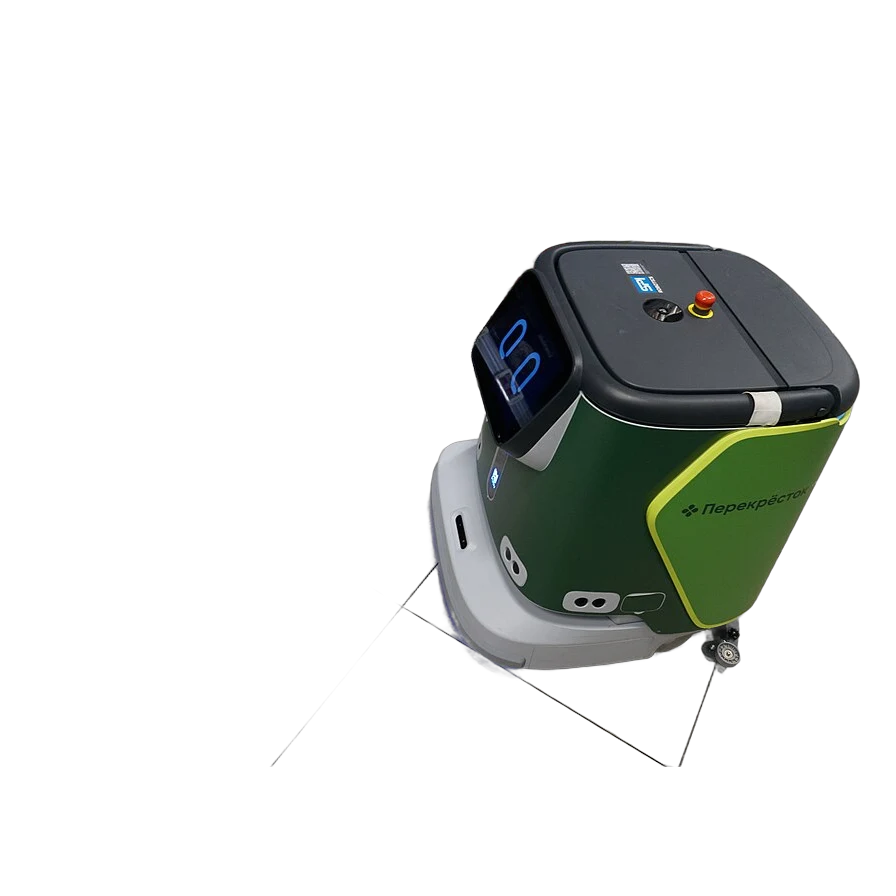
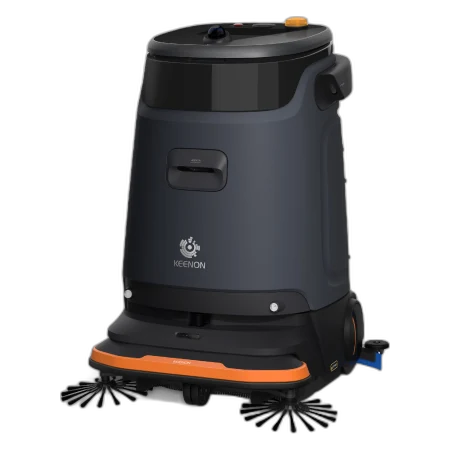
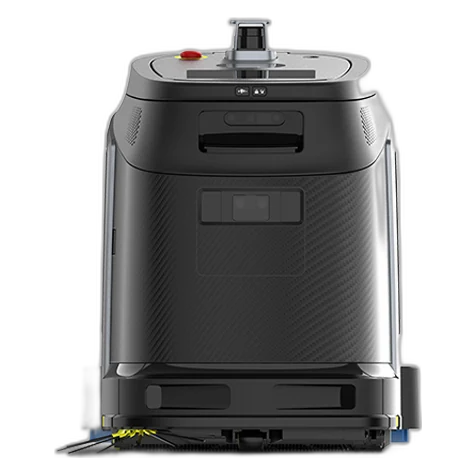
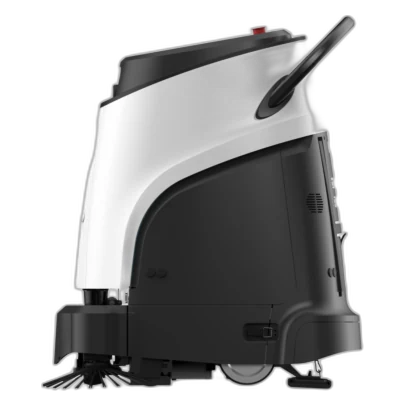
A commercial cleaning robot is an autonomous floor machine that sweeps, vacuums, scrubs or mops large areas on its own. Cleaners set a route once, then the robot repeats it while staff focus on toilets, kitchens, touch points and spot cleaning. The best machines also return to a dock to charge, refill clean water and empty dirty water.
This guide is for facilities managers, cleaning contractors and business owners. We compare seven robots across two size classes, with published prices where they exist, and explain how to judge return on investment (ROI). For other business categories, see our service robot hub.
Commercial cleaning robots compared| Model | Price (Oct 2026) | Type | Coverage per hour | Best for |
|---|
| Pudu CC1 | around $27,999 | 4-in-1 | up to 10,764 sq ft | Mixed floors |
| Keenon KLEENBOT C40 | around $18,000 to $19,600 | 4-in-1 | about 11,840 sq ft | Value |
| Gausium Phantas | Quote | Compact cleaner | 4,300 to 7,500 sq ft | Small spaces |
| Gausium Vacuum 40 | Quote | Vacuum | up to 13,000 sq ft | Carpet |
| Avidbots Neo 2W / Kas | Quote | Scrubber | Not published | Large public sites |
| Tennant T7AMR | Quote | Ride-on scrubber | Not published | Big-box retail |
| Kärcher KIRA B 50 | around $56,435 | Scrubber dryer | up to 25,457 sq ft (theoretical) | Large hard floors |
In depth: every pick
Best all-rounder for mid-sized spaces
1. Pudu CC1
Best for: Offices, hotels, schools and retail with mixed hard floors and carpet
- Price
- around $27,999 (Oct 2026, Sanitaire Commercial listing on Google Shopping)
- Functions
- Sweeping, scrubbing, vacuuming and dust-mopping (4-in-1)
- Coverage
- 7,535 to 10,764 sq ft per hour
- Tanks
- 3.96 gal clean, 3.96 gal dirty
- Run time
- 3 to 9 hours; under 3 hours to charge
- Navigation
- Visual and LiDAR SLAM (camera and laser mapping)
Pros
- One machine covers several cleaning jobs
- Can recharge, refill and return to work on its own (with station)
- Sold through established cleaning brands such as Sanitaire
Cons
- Small tanks compared with ride-on scale scrubbers
- Check exactly what the station or workstation price includes
Verdict: The CC1 is a sensible default for buildings that mix carpet and hard floor. Ask for a site demo to confirm it handles your thresholds and furniture layout.
Best value 4-in-1
2. Keenon KLEENBOT C40
Best for: Hotels, offices and shops that want a 4-in-1 robot at a lower price
- Price
- around $18,000 to $19,600 (Oct 2026, US reseller listings from Hero Robots and Knoxlabs)
- Functions
- Sweeping, vacuuming, scrubbing and dust pushing
- Coverage
- Up to 1,100 m² (about 11,840 sq ft) per hour
- Tanks
- 16 L clean, 11 L dirty, 8 L dust bag
- Battery
- Up to 5 hours scrubbing, 12 hours sweeping; 5-second battery swap
- Navigation
- VSLAM plus LiDAR, stereo vision, line lasers and ultrasonic sensors
Pros
- Quick battery swap keeps it working through long shifts
- Detects carpet and hard floor automatically
- Can use lifts and doors with IoT integration
Cons
- Scrubbing run time is shorter than sweeping
- Price varies between resellers
Verdict: The C40 offers a similar 4-in-1 approach to the CC1 for less money on published listings. Its swappable battery is a real advantage for 24-hour sites. Keenon's smaller KLEENBOT C30 has been listed from around $11,900 for lighter duties.
Best for small spaces
3. Gausium Phantas
Best for: Smaller offices, clinics, shops and hotel corridors
- Coverage
- 4,300 to 7,500 sq ft per hour (US dealer figure)
- Battery
- 5 to 18 hours depending on mode (US dealer figure)
- Clean water tank
- 3.2 gal
- Weight
- 106 lb
Pros
- Light and compact
- Long run time in lighter cleaning modes
Cons
- Lower coverage than larger machines
- Price on request
Verdict: Phantas is Gausium's compact commercial cleaner for small to midsize spaces. If your floor area is modest, it may do the job without the cost of a full-size scrubber.
Best for carpeted buildings
4. Gausium Vacuum 40
Best for: Carpeted offices, hotels, cinemas and schools
- Coverage
- Up to 13,000 sq ft per hour (US dealer table; the dealer's text also cites 12,000)
- Battery
- 3 to 18 hours depending on mode (US dealer figure)
- Weight
- 205 lb
Pros
- Dedicated commercial vacuum rather than a compromise all-in-one
- High hourly coverage for carpet
Cons
- No wet scrubbing
- Heavy compared with 4-in-1 robots
Verdict: If most of your floor is carpet, a dedicated robotic vacuum like the Vacuum 40 is a better fit than a scrubber.
Best for large public buildings
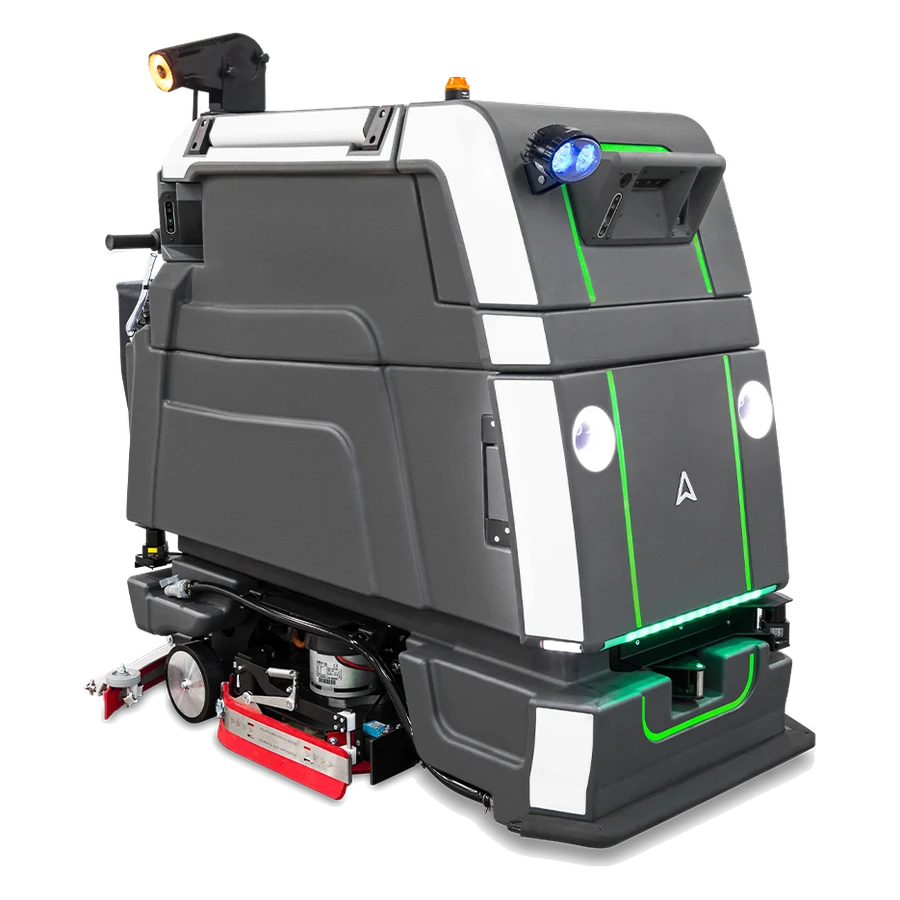
5. Avidbots Neo 2W and Kas
Best for: Airports, warehouses, shopping centres, hospitals and universities
- Type
- Autonomous floor scrubbers (Neo, Neo 2W; Kas for tight spaces)
- Sensors
- LiDAR and 3D sensors for a 360 degree view
- Software
- Avidbots Autonomy plus Command Center reporting web app
- Support
- Remote Assistance team
Pros
- Built specifically as robots, not converted manual machines
- Remote assistance and cleaning reports for managers
- ISO 9001 and ISO/IEC 27001 certifications listed
Cons
- No published prices
- Overkill for small sites
Verdict: Avidbots focuses on big, busy buildings and backs its machines with remote monitoring. Ask for reference sites in your sector and a sample cleaning report.
Best for retailers already using Tennant
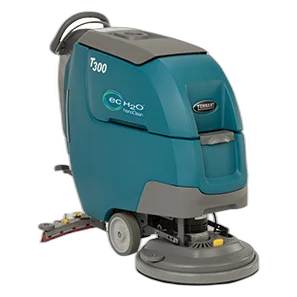
6. Tennant T7AMR (BrainOS)
Best for: Supermarkets, big-box retail and warehouses
- Type
- Ride-on scrubber that can run autonomously
- Cleaning path
- 26 in (about 650 mm)
- Run time
- Up to 6.5 hours with lithium-ion (industry listing)
- Software
- BrainOS teach-and-repeat routes
Pros
- Can also be driven manually by staff
- Brain Corp reports 50,000+ robots deployed across six continents
Cons
- Large machine; not for small sites
- Pricing through dealers only
Verdict: Brain Corp supplies the autonomy software, and Tennant builds the machine. If you already run Tennant scrubbers, an autonomous model can slot into existing service contracts.
Best large-tank scrubber dryer
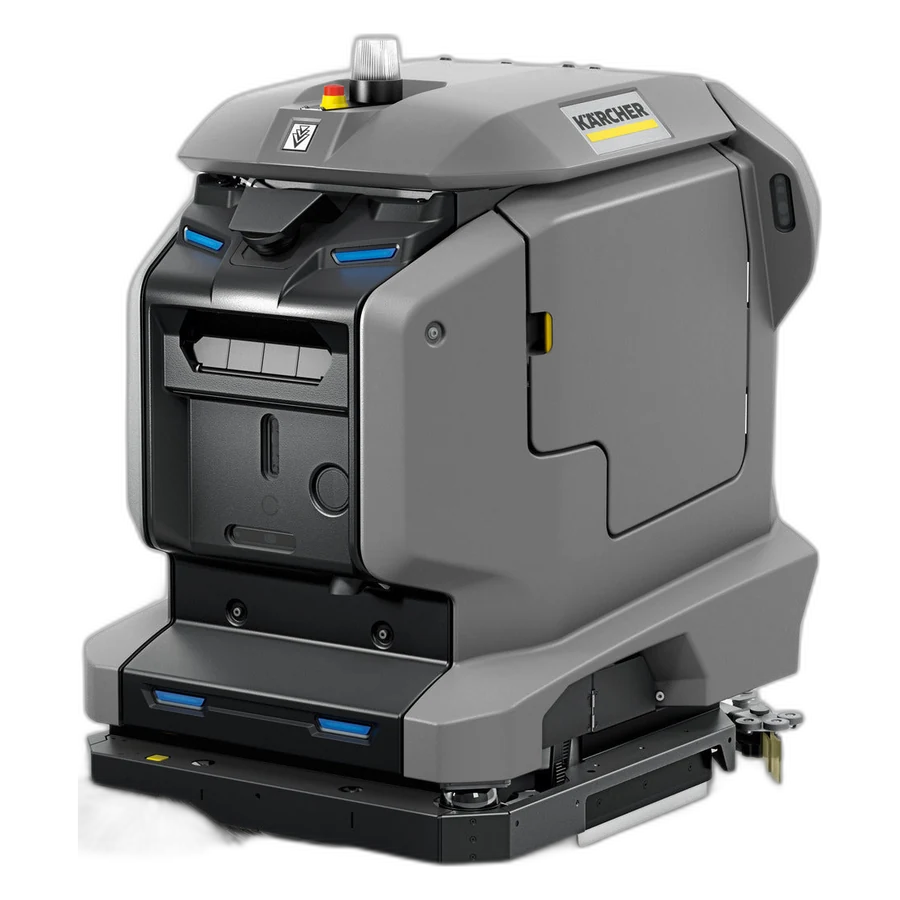
7. Kärcher KIRA B 50
Best for: Large hard-floor areas such as retail, logistics and transport hubs
- Price
- around $56,435, docking station extra at $3,195 (Oct 2026, Automation Hub)
- Area performance
- Up to 25,457 sq ft per hour (theoretical, per Kärcher)
- Working width
- 22 in brush, 29.5 in vacuum
- Tanks
- 55 L clean, 55 L recovery
- Battery
- About 4 hours; about 5.8 hours to charge
Pros
- Large tanks for long runs between refills
- Optional dock refills, drains and rinses automatically
Cons
- Highest price in this guide
- Listings vary widely between resellers
Verdict: The KIRA B 50 is for operators with big, open hard floors who want fewer refill stops. Budget for the docking station, software and service plan on top of the base price.
How we chose
We have not run these machines on our own premises. Our picks are based on:
- Manufacturer and dealer specifications for coverage, tank size, run time and navigation.
- Published prices from US resellers where available, with the seller and date named. Many makers only quote after a site visit.
- Company scale and support, such as deployment numbers and remote monitoring.
- Fit for different building types, from small offices to warehouses.
Coverage figures are manufacturer or dealer claims under ideal conditions. Real output depends on furniture, obstacles and cleaning settings.
Types of commercial cleaning robot
- 4-in-1 compact robots (Pudu CC1, Keenon C40) sweep, vacuum, scrub and mop. Good for offices and hotels with mixed floors.
- Robotic vacuums (Gausium Vacuum 40) for carpeted buildings.
- Autonomous scrubber dryers (Avidbots, Kärcher KIRA B 50) wash and dry large hard floors.
- Autonomous ride-on scrubbers (Tennant T7AMR with BrainOS) that staff can also drive manually.
For home robot vacuums, see our robot vacuum guides. Consumer models are not built for commercial duty cycles.
Commercial cleaning robot cost: buy, lease or subscribe
Published US prices in October 2026 ranged from about $11,900 (Keenon C30) and $18,000 (Keenon C40) to around $28,000 (Pudu CC1) and over $56,000 (Kärcher KIRA B 50, before dock). Larger autonomous scrubbers from Avidbots and Tennant are usually quoted after a site assessment.
Most suppliers also offer leasing or a subscription that bundles software, support and sometimes servicing. Service Robot Co., a US integrator, offers outright purchase or lease through financing, with a free site assessment first. Ask every supplier to break down: hardware, docking station, software licence, maintenance, consumables (brushes, pads, squeegees) and replacement batteries.
ROI: when does a cleaning robot pay off?
Cleaning robots save labour on large, repetitive floor areas. They rarely remove a whole cleaner; instead they free people for detail work. To estimate payback:
- Measure the floor area cleaned by machine each day and the hours it takes now.
- Use a realistic robot coverage rate, well below the brochure maximum.
- Value the hours saved at your fully loaded labour cost.
- Subtract lease or finance costs, software, maintenance and the time staff spend loading, emptying and supervising.
Vendor ROI calculators can be a useful start. Service Robot Co.'s homepage, for example, shows a sample estimate of annual savings for a five-person cleaning team, but labels it "not a quote". Treat all vendor figures as best-case until you have run a trial in your own building.
Running a pilot: how to introduce a robot without disruption
Most suppliers will offer a demo or short trial. Use it properly:
- Pick a representative area, not the easiest corridor. Include doorways, mats, furniture and a busy period.
- Set a baseline before the trial: time taken, water and chemical used, and a simple cleanliness score from a supervisor walk-round.
- Involve the cleaning team early. Explain that the robot takes the repetitive floor passes so they can focus on detail and hygiene work. Staff who feel threatened by a robot are less likely to load, empty and look after it well.
- Log every intervention, such as rescues when the robot gets stuck, manual top-ups and missed areas. These hidden minutes often decide whether the business case holds up.
- Check out-of-hours security. If the robot cleans at night, make sure alarms, door access and lift controls are set up for it.
- Review after four to six weeks against your baseline before signing a long lease.
Ask the supplier who owns the floor maps and cleaning data, and whether you can export reports if you switch provider later.
What to check before you buy
- Docking station: is automatic refill, drain and charge included, or extra? On the KIRA B 50 it is a $3,195 add-on.
- Lifts and doors: multi-floor buildings need lift integration. Keenon's C40, for example, supports IoT-enabled lift and door passage.
- Floor types: confirm carpet detection and threshold heights.
- Reporting: managers should be able to see what was cleaned and when, as with Avidbots' Command Center.
- Safety certification and insurance for operating in public areas.
- Service coverage in your region, including response times and loan machines.
Free, no obligation
Get quotes from suppliers
Tell us what you need. We pass your request to up to three relevant suppliers or dealers, who contact you with prices, lease options and demos. Popular for restaurants, hotels, offices, warehouses and care settings.
We only share your details with suppliers for this request. See our privacy policy.
Frequently asked questions
How much does a commercial cleaning robot cost?
Published US prices in October 2026 ranged from about $11,900 for a compact Keenon C30 to around $56,435 for a Kärcher KIRA B 50 before its docking station. Many larger machines are quote-only.
Can a cleaning robot replace cleaning staff?
Not entirely. Robots handle large, repetitive floor areas, while people still clean toilets, kitchens, touch points and spills, and load and supervise the robots.
What is the difference between Brain Corp and Tennant?
Brain Corp makes BrainOS, the autonomy software. Tennant builds floor scrubbers, such as the T7AMR, that run BrainOS.
Do commercial cleaning robots work on carpet?
Some do. 4-in-1 robots like the Pudu CC1 and Keenon C40 handle carpet and hard floor, and Gausium's Vacuum 40 is designed for carpet. Scrubber dryers are for hard floors only.
Can I lease a commercial cleaning robot?
Yes. Most suppliers and integrators offer leasing or subscription plans that spread the cost and often include software and support.
How long does a cleaning robot run on one charge?
It depends on the mode. Keenon quotes up to 5 hours scrubbing or 12 hours sweeping for the C40, and Pudu quotes 3 to 9 hours for the CC1.
ET
Written by our editorial team. We compare robots using manufacturer specifications, independent lab results and owner reviews, and we update guides when prices or models change. We do not accept payment for placement.
Our research method.
Related guides
Service Robots for BusinessService robot guide for business owners: restaurant, cleaning, delivery and security robots compared, with 2026 prices, Best Restaurant RobotRestaurant robot buyer's guide for 2026: BellaBot Pro, Servi, Keenon T8 and T10, KettyBot Pro and LG CLOi compared on prBest Security Robot for BusinessSecurity robot buyer's guide for 2026: Knightscope, SMP Robotics, Boston Dynamics Spot, Pudu D5 and more compared on cosFood Delivery RobotsFood delivery robots explained for business owners: Serve, Starship, Coco and Avride, how restaurants join, costs, indooRobot Vacuum GuideEverything you need to choose a robot vacuum in 2026: top picks, buying guides by floor type and budget, brand reviews a Sources
- Sanitaire Commercial: Pudu CC1
- ICE Co-Botics range (Pudu CC1 as Shadow)
- Keenon KLEENBOT C40
- Gausium product lineup
- Navia Robotics cleaning robot specifications
- Avidbots
- Brain Corp
- OrionStar: Top 10 cleaning robots for commercial spaces (Apr 2026)
- Automation Hub: Kärcher KIRA B 50
- Service Robot Co.